

The Quiet Double Standard in Medicine: Why Alternative Healing Is Forced to Prove Itself Differently

Modern medicine presents itself as a system governed by evidence, neutrality, and scientific rigor. In principle, this is admirable. Science should challenge assumptions, demand proof, and protect people from fraud, false hope, and dangerous misinformation.
But somewhere along the way, a subtle shift occurred.
Science stopped being treated purely as a method of inquiry and began functioning, culturally, as a centralized authority structure. And once that happened, questioning the dominant medical worldview no longer merely became “scientific disagreement.” It became social deviance.
This is especially visible in the treatment of alternative medicine, particularly acupuncture.
Acupuncture exists in a strange cultural position. Millions of people report benefit from it. Major hospitals integrate it into pain clinics and supportive care programs. Patients who have exhausted conventional routes often seek it out after years of failed medications, surgeries, injections, scans, specialists, and dead ends.
Yet despite this, acupuncture is still routinely discussed in public discourse as if it belongs somewhere between superstition and fraud.
Why?
The answer reveals something much larger than acupuncture itself. It reveals a contradiction at the center of modern medicine.
The Asymmetry of Failure
When conventional medicine fails, people rarely conclude that medicine itself is fake.
A chronic back pain treatment fails?
The response is:
“The spine is complicated.”
“Pain is multifactorial.”
“Not every patient responds the same way.”
“Sometimes it takes trying multiple approaches.”
“Bodies heal differently.”
A medication fails?
“We may need to adjust the dosage or try another one.”
An injection fails?
“Some patients respond well while others don’t.”
A surgery fails to resolve symptoms?
“Unfortunately outcomes can vary.”
In other words, conventional medicine is granted complexity, uncertainty, and nuance.
Now compare that with acupuncture.
A patient receives acupuncture and improves dramatically after years of unresolved symptoms:
it was placebo
coincidence
temporary
anecdotal
psychosomatic
But if a patient receives acupuncture and does not improve?
> “See? Acupuncture doesn’t work.”
Notice the difference.
Conventional medicine is allowed to fail without losing legitimacy. Alternative medicine often must succeed perfectly just to be considered potentially valid.
That is not neutral skepticism. That is a cultural double standard.
The Placebo Problem Nobody Wants to Fully Admit
Modern medicine often speaks about placebo as if it were evidence of falseness.
But placebo is one of the strangest and most revealing phenomena in all of science.
A person’s:
expectation
trust
emotional state
perception of care
ritual
meaning
nervous system state
can measurably alter:
pain
inflammation
stress physiology
hormone signaling
immune function
mood
fatigue
autonomic regulation
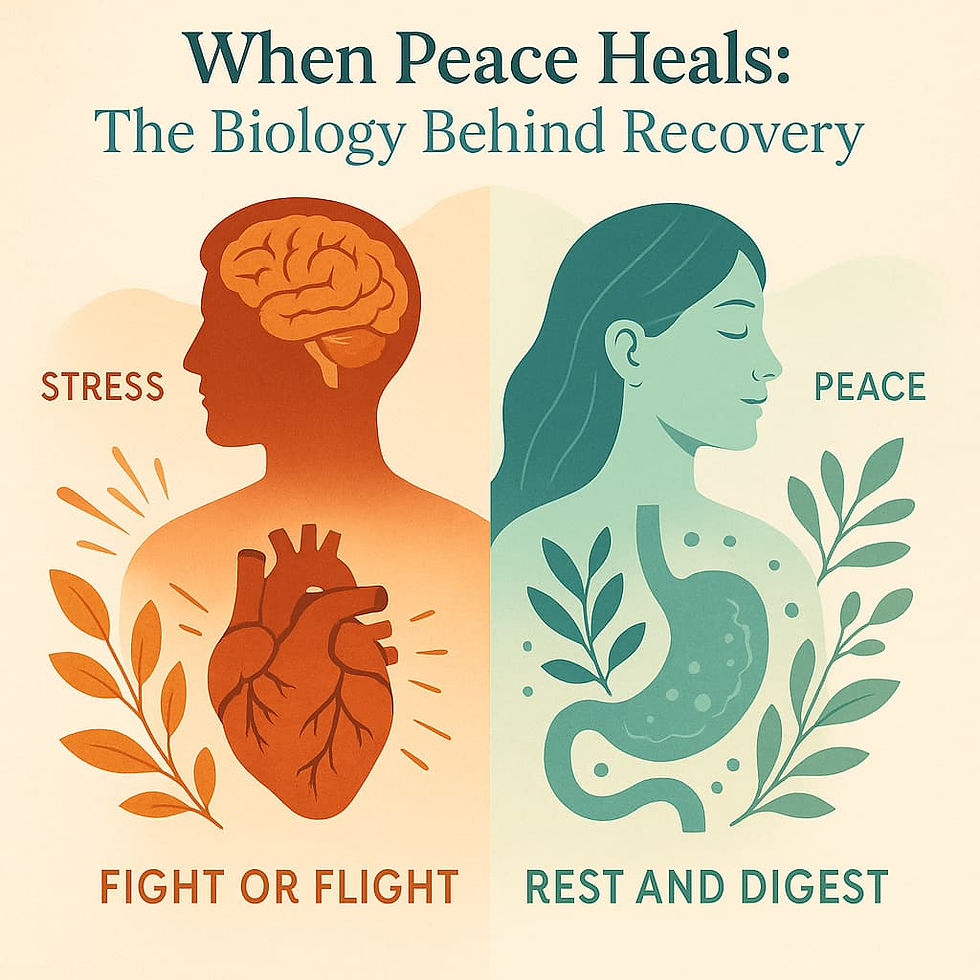
The body responds not only to chemistry, but to interpretation.
That should humble us.
Instead, modern discourse often weaponizes placebo as a dismissal:
> “It only works because the person believed in it.”
But why is that framed as meaningless?
If belief, relationship, attention, ritual, and nervous system regulation can influence physiology, then perhaps healing is larger than the narrow mechanistic model modern medicine prefers.
The irony is that all medicine relies on contextual healing effects.
A doctor’s confidence matters.
A clinical environment matters.
Trust matters.
Fear matters.
Human connection matters.
Even pharmaceutical studies struggle constantly against placebo effects because the placebo response is so powerful.
And yet when acupuncture operates partly within this relational and regulatory domain, critics often frame that as proof of illegitimacy rather than evidence that medicine itself may be more complex than previously assumed.
The Myth of Pure Objectivity
Modern biomedicine presents itself as objective while alternative medicine is framed as emotional, mystical, or irrational.
But conventional medicine is not free from:
financial incentives
institutional bias
pharmaceutical influence
publication bias
professional politics
status hierarchies
overconfidence
historical error
Entire generations of approved medical practices were later reversed or abandoned.
Doctors once promoted:
cigarettes
lobotomies
aggressive opioid prescribing
hormone regimens later reconsidered
procedures adopted before adequate evidence
Medicine evolves precisely because it is not infallible.
And yet the public is often taught to think in binaries:
mainstream = science
alternative = delusion
Reality is more complicated.
There are fraudulent alternative practitioners. Absolutely.
But there are also institutional failures inside mainstream medicine that affect millions of people while hiding behind credentials, insurance systems, and scientific branding.
The white coat does not eliminate human nature.
Why Acupuncture Threatens the Reductionist Model
Acupuncture presents a unique challenge to modern Western medicine because it does not fit neatly into reductionism.
Reductionism attempts to isolate:
single mechanisms
single variables
single causes
single interventions
Acupuncture emerged from an entirely different worldview:
systems interaction
regulation
pattern recognition
energetic balance
functional relationships
individualized treatment
Modern research struggles with this because acupuncture is difficult to standardize without partially stripping away its philosophical foundation.
Two patients may receive different treatments for the same symptom because the practitioner sees different underlying patterns.
From a biomedical perspective, this appears inconsistent.
From within the acupuncture framework, individualized treatment is the point.
The result is a clash of paradigms.
The Problem With “Sham Acupuncture”
Critics often point out that acupuncture only slightly outperforms sham acupuncture in some studies.
But this raises an obvious question: What exactly counts as a placebo in acupuncture?
If inserting needles into the body anywhere can influence:
fascia
nerves
circulation
mechanoreceptors
endogenous opioids
autonomic tone
then “fake acupuncture” may not actually be inert.
In drug trials, sugar pills are biologically inactive.
But sham acupuncture may still physiologically stimulate the body.
This creates a bizarre situation where acupuncture is criticized for failing to massively outperform a control condition that may itself still produce therapeutic effects.
The Institutional Fear of Uncontrolled Healing
There is another layer underneath all of this that few people openly discuss.
Modern healthcare systems depend heavily on:
centralized expertise
standardized protocols
regulatory control
predictive models
measurable outcomes
Acupuncture operates partially outside that structure.
It introduces uncomfortable possibilities:
healing may not be fully reducible to chemistry
subjective experience may matter more than assumed
relationship itself may be therapeutic
individualized care may outperform rigid protocols in some cases
the body may possess underappreciated self-regulatory capacities
This threatens not only specific treatments, but an entire worldview.
Because once healing becomes less centralized and less mechanistically predictable, authority becomes less absolute.
And institutions do not generally like uncertainty.
The Public Is Caught Between Two Extremes
The tragedy is that people are often forced into false choices.
Either:
worship mainstream medicine unquestioningly
or:
reject science entirely
But neither extreme is necessary.
One can recognize:
the brilliance of emergency medicine
the miracle of antibiotics
the value of surgery
the importance of evidence
while also recognizing:
the limits of reductionism
the reality of nervous-system-mediated healing
the importance of individualized care
the failures of institutional medicine
the philosophical incompleteness of purely mechanistic models
This middle ground is where many thoughtful practitioners actually live.
What Patients Know That Statistics Cannot Fully Capture
Patients are not stupid.
Many people who seek acupuncture are not naïve anti-science radicals. They are people who:
tried everything else
felt unseen
felt reduced to symptoms
were passed between specialists
accumulated diagnoses but not healing
wanted someone to treat them as a whole human being
And sometimes they improve.
Not always. But sometimes profoundly.
The scientific establishment often struggles with this because lived human experience does not always fit cleanly into population-level abstractions.
Statistics matter. But statistics are not the totality of reality.
A patient is not an average.
The Real Question
The real question is not:
> “Should acupuncture replace all conventional medicine?”
Very few serious practitioners believe that.
The real question is:
> Why does modern culture grant infinite interpretive flexibility to conventional medicine while demanding impossible certainty from alternative systems?
Why is conventional failure considered complexity, while alternative failure is considered fraud?
Why are low-risk modalities treated with such reflexive hostility while highly invasive interventions with severe side effects retain automatic legitimacy?
Why is healing that emerges through:
relationship
regulation
ritual
attention
nervous system balance
embodied experience
so quickly dismissed as unreal?
Perhaps the deepest issue is this:
Modern medicine has become extraordinarily technologically sophisticated, but many people increasingly feel that it has lost contact with the full reality of what it means to heal.
And acupuncture, whether one fully accepts its traditional framework or not, reminds people that healing may involve far more than the narrow mechanical correction of isolated pathology.
That possibility unsettles the modern worldview far more than most institutions are willing to admit.


Comments